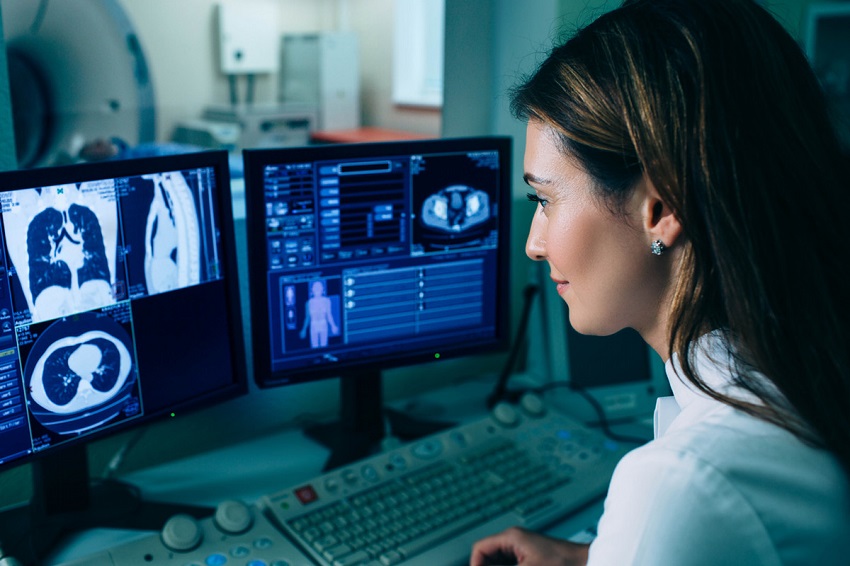
Winship Cancer Institute of Emory University is advancing its commitment to reducing lung cancer deaths across Georgia with the launch of the Emory Healthcare Lung Screening and Nodule Program on Dec. 15, 2025. This new program focuses on early detection and treatment of lung cancer through low-dose lung screening CT and AI-assisted recognition of incidentally found pulmonary nodules. Lung nodule management through care coordination and navigation is the foundation of the program, ensuring patients receive timely follow-up and appropriate interventions. The goal is to find lung cancer early, when it is most treatable.
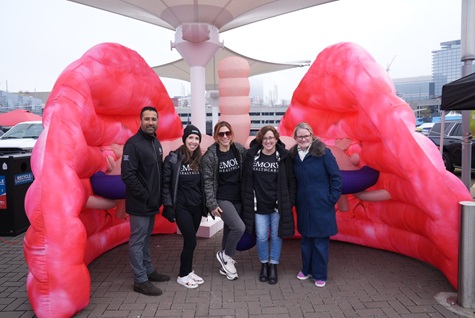
To build awareness ahead of the launch, the program team members including thoracic surgeons Rachel L. Medbery, MD, and Onkar Khullar, MD, MSc, joined the Winship Mobile Prostate Cancer Screening bus at the Atlanta Falcons Legends game on Dec. 7, engaging fans at the Home Depot Backyard outside Mercedes-Benz Stadium. Visitors — including Falcons legends Drew Davis, Chris Draft, Lamar Holmes, Mareno Philyaw and Al Richardson— explored the inflatable lungs and spoke with the members about lung cancer risks, screening benefits and who may qualify. The program is distinguished by a deeply integrated model of care that places Winship’s nationally recognized expertise at its center. Patients who require further evaluation are connected with Winship thoracic surgeons, interventional pulmonologists, radiologists and other specialists who work together to ensure accurate diagnosis and a personalized treatment plan.
This collaboration incorporates advanced techniques such as robot-assisted bronchoscopy, minimally invasive lung cancer surgery and AI-enhanced imaging technology — tools that help clinicians detect and treat lung cancer at the earliest possible stage.
 Medbery, who helps lead the new program, emphasizes the urgency of screening. “Lung cancer remains the leading cause of cancer death in the U.S., and it often doesn’t show symptoms until it’s advanced,” she says. “When we find it early — before it has spread — treatment is far more likely to be successful. Low-dose CT screening allows us to detect cancer when it is still small and highly treatable.”