
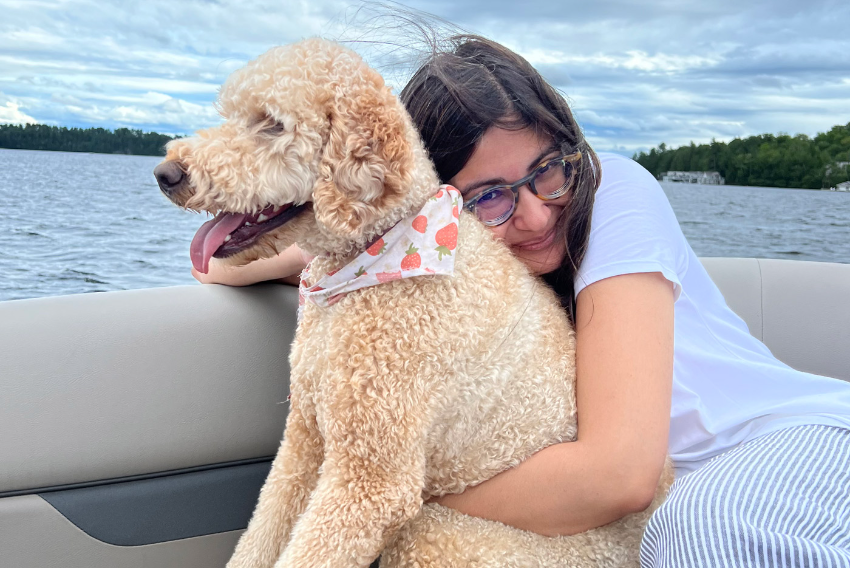

 Asking about patients’ pets or companion animals can strengthen the clinician-patient relationship, leading to improved communication, greater patient openness and disclosure of responsibilities that may shape how patients make decisions, the authors write. Proactive screening and coordinated support of pet care while patients are hospitalized aligns with addressing social determinants of care, which could lead to a practical, patient-centered approach to improve adherence and continuity of care. A single question could then trigger referral to case management or social work to assist in removing barriers for care.
“For those of us who are physicians, it’s a foregone opportunity not only to facilitate care but to build bonds with our patients—it’s such a simple thing to include information about pets in the medical record,” says Jagsi. “Pet ownership is an important element of the social history for so many people.”
While recognizing the importance of keeping people and their animals together, implementation of efforts remains fragmented. The researchers note that collaborations between health systems and local animal shelters, rescue organizations, veterinarians, social service agencies, foster networks and other nonprofit organizations could assist with coordination of temporary animal care for the humans who are ill and their pet companions in need, leading to improved outcomes for both humans and animals.At its core, we are advocating for a broader vision of total family care,” explains Moore. “If a patient considers an animal part of their family — and that relationship materially affects their wellbeing and healthcare decisions — then our systems should at least recognize the relationship, ask about it and have pathways to help when that bond is disrupted by illness.” Moore is the proud pet parent of three rescued black miniature schnauzers named Teddy, Travis and Tucker.
Jagsi, who is also a part of Emory Healthcare and Winship Cancer Institute of Emory University, now routinely asks her patients about pet ownership, in hopes of reducing barriers to health care access.
She states, “Caring for animals is perhaps one of the most essential aspects of what makes us human; human medicine must no longer ignore that.”
Moore could not agree more. “If we truly aspire to provide compassionate, patient- and family-centered healthcare, we should recognize the family as the patient defines it. And for millions of people, that family member has four legs, a name and is someone waiting for them at home.”