
- With the growing popularity of supplements, many people in cancer treatment wonder: is it safe to take supplements during cancer?
- Experts at Winship Cancer Institute of Emory University say it’s critical that patients discuss supplements with their medical oncology team or dietitian to determine their safety and efficacy.
- Your care team will vet your supplement list, taking into consideration any existing research, interactions with your cancer treatment regimen or other medications.
- Foundational health like nutrition or getting vitamin D through sunlight can support healing in many of the ways supplements promise.
Can You Take Supplements During Cancer Treatment? What Experts Say
Date: Jan 13, 2026

Summary
Supplements—the various vitamins, minerals, herbs or amino acids that are added to the diet to help fill nutritional gaps—have become part of everyday life for many Americans.
And it’s a growing industry—the U.S. supplements market in 2024 was valued around $63.65 billion and is projected to reach over $124 billion by 2033.
But should you take supplements during cancer treatment?
When it comes to cancer and dietary supplements, it’s important to know what exactly is in those pills, capsules, powders, gummies, liquids or topicals you may be considering—and how they may interact with cancer treatment.

Cancer care designed around you and your life.
When you come to Winship for cancer care, you have a team of experts dedicated to your well- being. If you have been diagnosed with cancer or need a second opinion, we're here for you.
Make an AppointmentAre supplements safe during cancer treatment?
Laura Wright, ND, an integrative oncologist at Winship Cancer Institute of Emory University, estimates that “9 out of 10” of her patients ask about supplements.
Cancer care at Emory Winship Cancer Institute starts with the foundations of health, Dr. Wright says. “Nutrition, exercise, stress management and environmental toxin avoidance, among other topics. I generally do not discuss supplements right away.”
That’s because Dr. Wright’s goal as a licensed naturopathic doctor is to ensure people with cancer have access to safe, evidence-based integrative therapies that complement and support conventional cancer treatments.
“I always begin with a discussion about safety, as supplements are not regulated,” Dr. Wright says.
Unlike prescription medications, supplements aren’t approved or regulated by the Food and Drug Administration (FDA).
Manufacturers aren’t required to prove their products are safe. Although companies can make claims if they have scientific substantiation—such as “maintains healthy joints”—the product must include a disclaimer stating that the FDA has not evaluated the claim and that the product is not intended to “diagnose, treat, cure or prevent any disease.”
When patients ask about supplements, Dr. Wright asks what they are taking and where they purchased it because sourcing is a top priority.
“Due to lack of regulation, we cannot be certain that what is listed on the label is actually in the product,” says Dr. Wright.
Other things Dr. Wright takes into consideration:
- Only purchasing supplements on reputable websites that offer physician-grade products
- Evaluating the safety of any supplement in the context of a patient’s cancer-directed treatment plan
- Assessing potential interactions with chemotherapy, immunotherapy, radiation and other targeted therapies
“Our goal is to ensure that any supplement a patient considers is not only safe but also does not diminish the effectiveness of their cancer-directed therapies or introduce unnecessary risks.”
-Laura Wright, ND
Cancer nutrition tips: foods that support healing
Diet and nutrition are important for anyone’s health, and especially important for people undergoing cancer treatment.
“We emphasize a food-first approach,” Dr. Wright says, “ensuring that the body receives the essential nutrients it needs to support healing—nutrients that cannot be adequately obtained from supplements alone. I often refer patients to our nutrition department for additional guidance tailored to their individual dietary needs.”
She explains that a variety of nutrients and minerals play key roles in the healing process. She recommends patients:
- Consume anti-inflammatory foods
- Minimize processed foods in their diets
- Incorporate healthy fats, such as omega-3s from sources like fish, avocado and walnuts
“Diet is a priority since supplements cannot compensate for poor nutritional habits.”
Winship Cancer Institute incorporates clinical dietitians as part of its clinical teams—another ancillary service like Winship’s pharmacy or social workers, for example.
Registered dietitian Rachel Keller, MS, RD, CSO, LDN, offers nutrition advice and support to patients receiving treatment at Winship at Emory Saint Joseph's Hospital.
“Every patient is different,” she says. “We don’t have a compiled list of what’s okay for patients and what’s not because certain treatment regimens require patients to be more restrictive in which supplements they can and can’t take. We always tell patients talk to your dietitian or your pharmacist. They can cross-reference.”
“We emphasize a food-first approach, ensuring that the body receives the essential nutrients it needs to support healing—nutrients that cannot be adequately obtained from supplements alone.”
-Laura Wright, ND
How supplements are cross-referenced for cancer safety
“When a patient asks about supplements,” Keller says, “we’ll look at their health history, treatment plan and current medication list—whether that’s for cancer treatment or other underlying health conditions.”
The first step is to see how the drugs are processed in the body. Next, the care team reviews resources like the Memorial Sloan Kettering Cancer Center herbal database or the commission on dietetic registration’s practice groups herbal database. These databases share supplement clinical details, purported uses and benefits, and any adverse reactions reported in research studies.
“We’ll look at what drugs that supplement could potentially interact with,” Keller says.
If a patient’s treatment regimen is processed in the same way in the body as the supplement, it can interfere with its effectiveness or possibly make it more toxic. Even if it doesn’t interact with the cancer treatment, it may still interact with another medication the patient is taking for something else.
“The vitamin I most commonly highlight is vitamin D, as it plays a key role in immune function, mood regulation and numerous other health benefits. Your medical oncology team or primary care physician can assess your vitamin D levels and recommend supplementation when appropriate.”
-Laura Wright, ND
Vitamins and cancer treatment
Although multivitamins are the world’s most common supplements, Dr. Wright is most often asked about specific herbs and vitamins that play a role in health during cancer treatment.
“The vitamin I most commonly highlight is vitamin D, as it plays a key role in immune function, mood regulation and numerous other health benefits,” she says. “Your medical oncology team or primary care physician can assess your vitamin D levels and recommend supplementation when appropriate.”
Vitamin D can be found in the following foods:
- mushrooms
- egg yolks
- fatty fish
- vitamin D-fortified milk
- soy milk
Vitamin D is naturally produced in the body by the skin’s exposure to sunshine. “A lack of time spent outdoors is common among many people—not just patients with cancer,” Dr. Wright explains. “It’s important to remember that we all need to step away from our work and daily responsibilities from time to time and spend meaningful time outdoors.”
“Every patient is different. We don’t have a compiled list of what’s okay and what’s not because certain treatment regimens require patients to be more restrictive in which supplements they can and can’t take.”
-Rachel Keller, MS, RD, CSO, LDN
The final word: to take supplements—or not?
The answer to whether or not to take supplements during cancer treatment is nuanced: it depends.
For example, if someone is going to receive treatment for a finite amount of time, Keller says they will ask the individual not to take the supplement while on treatment—but it can be okay with other long-term medications once treatment is done.
In other cases, there are definitely supplements to avoid during cancer treatment. People receiving radiation, for example, need to avoid supplements that can interfere with the effectiveness of radiation, including:
- Vitamin C
- Vitamin E
- Any other supplements with high quantities of antioxidants
What supplements help patients with cancer? Topical calendula is one of Dr. Wright’s “go-to’s” for people undergoing radiation therapy. Calendula—derived from marigold plants—is applied to the skin. She says it is “highly beneficial for skin healing,” and studies have shown it helps to lessen the severity of radiation dermatitis.
Even with her recommendations, Dr. Wright stresses patients should let their radiation oncologist know if they want to use topical calendula.
The ultimate answer to supplement use during cancer? Talk to your care team. They will provide guidance, recommendations and cross-reference supplements with your treatment plan to ensure your healthiest path forward.
Integrative Oncology Care at Emory Winship Cancer Institute
Integrative oncology prioritizes the patient experience, combining evidence‑based medicine with mind‑body practices, natural therapies and lifestyle changes to complement standard cancer treatments. At Winship Cancer Institute of Emory University, our integrative oncology specialists are here to support you as an active participant in your care.
Cancer care designed around you. And your life.
About Winship Cancer Institute of Emory University
Dedicated to discovering cures for cancer and inspiring hope, Winship Cancer Institute of Emory University is Georgia’s only National Cancer Institute-designated Comprehensive Cancer Center, a prestigious distinction given to the top tier of cancer centers nationwide for making breakthroughs against cancer. Winship is researching, developing, teaching and providing patients novel and highly effective ways to prevent, detect, diagnose, treat and survive cancer. Cancer care at Winship includes leading cancer specialists collaborating across disciplines to tailor treatment plans to each patient’s needs; innovative therapies and clinical trials; comprehensive patient and family support services; and a care experience aimed at easing the burden of cancer. For more information, visit winshipcancer.emory.edu.
Related Posts
-
 Proper diet can help cancer patients maintain weight, lower risk of infection and better tolerate some side effects while undergoing treatment.
 -
 Learn how a plant-based diet can lower your cancer risk and help people with cancer manage side effects from treatment.
 -
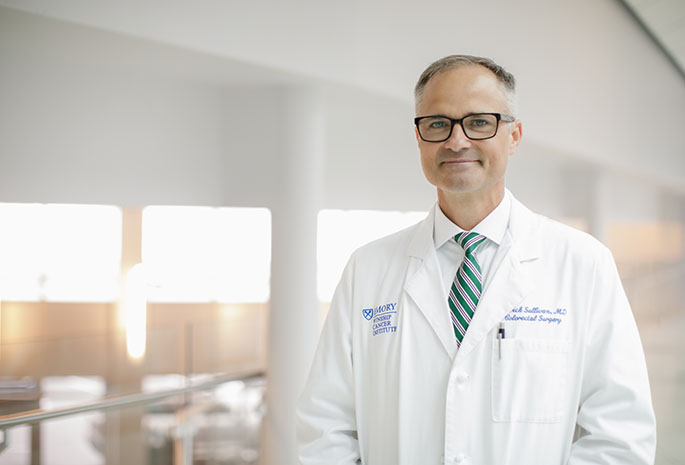 Dr. Patrick Sullivan, a colorectal surgeon at Emory Winship Cancer Institute, explains colorectal cancer’s rise in early onset cases, lists symptoms you shouldn’t ignore and encourages screenings starting at age 45 to save lives.
Emory Healthcare Pulse
Recent Posts
-
Oct 6, 2026
-
Sep 25, 2026
-
Sep 17, 2026
-
Sep 5, 2026
-
Aug 20, 2026
-
Aug 7, 2026