
-
Tennis partners William and Roger had a scary day at the tennis courts when William experienced cardiac arrest.
-
Soon after, Roger would get his heart checked out and realize his own heart had life-threatening blockages.
-
In this story, the pair share their individual journeys to Emory Healthcare’s Heart & Vascular team for bypass surgery — and the Emory care team shares what it was like caring for the tennis duo.
Florida Tennis Duo Doubles Up on Emory Heart Surgery
Date: Jan 5, 2026

Summary
William’s heart stopped on St. Patrick’s Day 2025 after he collapsed on the tennis court near his condo in Florida. “I remember walking up to the courts but nothing after that,” he says. “I couldn’t even tell you who we were playing.”
His tennis partner, Roger, remembers it all too well. “We were a few points into a match,” he says. “I was up near the net and Bill was waiting to receive the serve. All of a sudden, I hear this ‘thump.’ I look back and Bill’s on the ground. I had my cell phone in my tennis bag and I raced over to call 911.”
A woman playing on a nearby court began CPR. “At first, Bill had no pulse and wasn’t breathing,” says Roger. “She started doing chest compressions as hard as she could.”
The facility’s tennis director used a defibrillator to shock William’s heart. “That seemed to get him breathing,” Roger says. EMS showed up and took over, transporting William to a local hospital.
“Needless to say, that was the end of the tennis match,” Roger says. Later, he would learn William had been airlifted to Emory University Hospital Midtown in Atlanta, Georgia.

More options. Better outcomes.
Learn more about our world-class heart care. Make an appointment online, find a provider or call 404-778-7777 to schedule an appointment.
Life-saving luck and a rapid response after cardiac arrest
A lot of things went right that day for 75-year-old William, says John Puskas, MD, the Emory cardiothoracic surgeon who performed William’s bypass surgery.
William, an active retiree from Cincinnati who winters in Florida, suffered what is commonly known as a “widow maker” heart attack, a particular blockage in the left anterior descending (LAD) artery that causes this type of sudden cardiac death.
“Most people who have cardiac arrest in the community die where they fall and are not successfully resuscitated,” says Dr. Puskas. “You have to be in the right place to survive. A location with a CPR-trained person and access to an automated external defibrillator (AED) is the right place.”
Another advantage for William: the decision by his local cardiologist to transport him by helicopter to Emory Heart & Vascular due to our reputation for excellent outcomes in complicated cardiac cases.
“Most people who have cardiac arrest in the community die where they fall and are not successfully resuscitated. You have to be in the right place to survive. A location with a CPR-trained person and access to an automated external defibrillator is the right place.”
-John Puskas, MD, cardiothoracic surgeon
Airfield to Atlanta for emergency heart surgery
William remembers being flown to Atlanta and learning that he had experienced a heart attack and needed bypass surgery.
“I hadn’t really had any symptoms or indications up to that point. My stamina was slowing down a bit when I played,” says William, who is a lifelong tennis player and former high school coach. “I had my annual physicals and had taken cholesterol medication for years. My mother had had a quintuple bypass, so I made sure to keep my cholesterol numbers in check. And still, I ended up almost losing my life.”
He got to Atlanta on a Thursday night and was in the operating room Friday morning. “Everyone was very professional, and I got to meet Dr. Puskas when he was doing rounds with his group.”
William was in cardiogenic shock, where the heart can’t pump enough blood and oxygen to the brain and other organs. A temporary artificial blood pump was inserted into his femoral artery before his flight to Atlanta to support him. Once William arrived at Emory, improving blood flow to his heart was critical.
“I hadn’t really had any symptoms or indications up to that point. I had my annual physicals and had taken cholesterol medication for years. My mother had had a quintuple bypass, so I made sure to keep my cholesterol numbers in check. And still, I ended up almost losing my life.”
-William, patient
A complex bypass surgery with good outcomes
Often, stents – small mesh tubes – are used to improve blood flow to the heart. However, in cases like William’s where the blockages are too severe, surgeons may choose to use parts of the body to help reroute blood flow, such as arteries and veins. In William’s case, Dr. Puskas recommended a type of bypass surgery that relies on repurposing arteries for blood flow, known as total arterial revascularization (TAR).
“It’s an operation that’s pretty unique, which is why patients are sent to me from around the country and region,” says Dr. Puskas. “Veins from the leg don’t last as long, so we use arteries instead – two mammary arteries inside the breastbone and a radial artery from the patient’s left wrist. We do the operation with inflow from the two mammary arteries and outflow to the heart from those mammary arteries and the radial artery.”
William had a triple bypass and spent three weeks recovering in the hospital. He then stayed at a nearby hotel for a follow-up check and received clearance to fly home to Cincinnati about a month after his procedure.
“This type of bypass surgery is difficult to perform, but I consider it the best,” Dr. Puskas says. “It is easier on the patient, since we don’t stop the heart or use a heart machine to circulate blood outside the body. Recovery is easier, there’s less chance of stroke, it’s less invasive, the hospital stay is shorter, and the patient is more likely to be alive 10 years from now.”
Emory Heart & Vascular’s team of cardiac surgeons perform more than 3,000 heart and cardiothoracic operations a year, allowing hyper-specialization in specific areas of cardiac surgery. “I perform this operation nearly every day, four to eight times a week, every week,” Dr. Puskas says. “That’s the Emory edge that makes it worthwhile for a patient to get on a helicopter in dire straits and come here from out of state.”
“This type of bypass surgery is difficult, but I consider it the best. We don’t stop the heart or use a heart machine to circulate blood outside the body. Recovery is easier, there’s less chance of stroke, it’s less invasive, the stay is shorter, and the patient is more likely to be alive 10 years from now.”
-John Puskas, MD, cardiothoracic surgeon
"I should get my heart checked out"
William’s tennis teammate, Roger, 77, kept thinking about what had happened. “I told my wife, I’ve had some cardiac issues in the past, I think maybe I should go get my heart checked out,” he says. “I didn’t want to be the next guy lying face down on the tennis court.”
He had a stress test at his local hospital, and a few days later, the cardiologist called to tell Roger it was abnormal. He was brought back in for a cardiac catheterization and hoped a stent would solve the issue. The team found multiple significant blockages, however, and told Roger he needed bypass surgery. “Essentially the same surgery that Bill had.”
Since the local hospital didn’t offer bypass surgery, they offered to send Roger to Pensacola, Panama City or Atlanta. “I lived in Dunwoody for 29 years, so I knew all about Emory. My children and grandchildren still live in Atlanta. My wife said, ‘We choose Emory.’”
“I told my wife, I’ve had some cardiac issues in the past, I think maybe I should go get my heart checked out. I didn’t want to be the next guy lying face down on the tennis court.”
-Roger, patient

Emory team cares for the other half of the tennis duo
Roger’s cardiologist contacted Dr. Puskas, who reviewed his medical records and advised he needed to get there sooner rather than later; six days later he was at Emory University Midtown Hospital being prepped for surgery. He had a quadruple bypass, with Dr. Puskas using the same TAR technique he had on William.
“We knew the two patients were connected by this twist of fate,” Dr. Puskas says. “For our whole team, it was intriguing we were now caring for the other half of the tennis duo.”
Roger’s recovery took less time than William’s since he was treated preventively, before having trauma to his heart. “I’d much rather provide elective care instead of emergency care,” says Dr. Puskas. “It’s likely to prevent Roger from ever having a heart attack; he should live the rest of his life with a strong heart.”
And although William’s cardiac arrest happened during exercise, Dr. Puskas says, “avoiding exercise is not the answer. The answer is surveillance: regular check-ups, being physically fit and active, with good cholesterol control and blood pressure control.”
“We knew the two patients were connected by this twist of fate. For our whole team, it was intriguing we were now caring for the other half of the tennis duo.”
-John Puskas, MD, cardiothoracic surgeon
Right place, right time
Both men continue to take heart medications and had months of extensive cardiac physical therapy after their incisions healed. Happily, both have been cleared to play tennis again when they feel up to it.
“It’s like a made-for-TV movie,” says Roger. “What are the odds that tennis partners would need bypass surgery in the same year and both end up in Atlanta at Emory with the same surgeon?”
This fall, William celebrated his health with those who made it possible. The local fire district gathered those who helped save his life – including the first responders, the bystander who performed CPR, and the facilities’ tennis director who used the defibrillator – to honor their fast action.
“I survived only because a lot of people were in the right place at the right time and did the right things,” William told those being honored. “I just met my ninth grandchild. You are all a part of that.”
William says that fateful day had a silver lining. “In some ways, it was my best day on the tennis court. Roger and several others got their hearts checked out. Some bystanders were motivated to take CPR training because they felt helpless. All of that’s a plus. I don’t recommend my method, but I remain very grateful,” he says.
World-class heart care.
About Emory Heart & Vascular
When it comes to the heart, expertise matters most. Emory Heart & Vascular has a national reputation for treating simple to serious heart conditions using the most advanced treatment options and therapies available. These advancements offer a solution to patients that can’t be found anywhere else.
Our heart specialists have pioneered many procedures now practiced widely around the world, while continuing to set the standard of care through developing innovation and pushing boundaries. This ensures more treatment options and better outcomes for everyone. When it comes to matters of the heart, whether it's yours or a loved one's, nothing matters more than receiving the absolute best care. With more than 150 physicians in 23 locations, Emory Heart & Vascular brings that care close to home.
Related Posts
-
 Emory Healthcare cardiac and vascular surgeons are sharing their expertise and raising awareness about an overlooked condition, aortic dissection.
 -
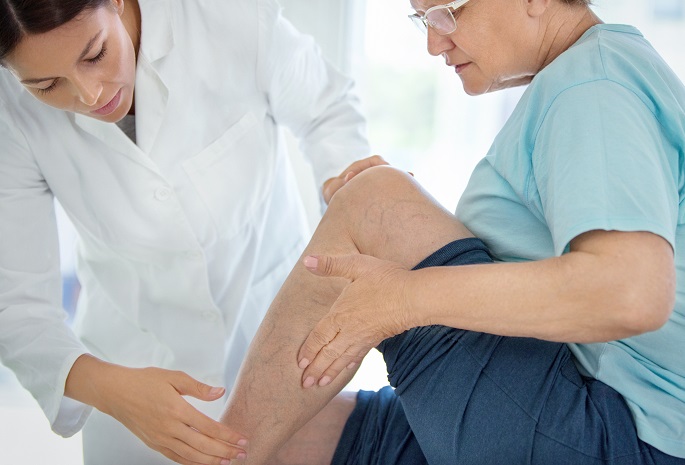 Learn about varicose veins symptoms, causes and treatment options, including leg swelling, fatigue and bulging veins. Discover how minimally invasive procedures like vein ablation can improve circulation and relieve discomfort, and when to see a specialist for vein disease treatment.
 -
 Learn how to manage high blood pressure with lifestyle tips and monitoring guidance from Emory Healthcare to protect your heart and reduce long-term risks.
Emory Healthcare Pulse
Recent Posts
-
Oct 6, 2026
-
Sep 25, 2026
-
Sep 17, 2026
-
Sep 5, 2026
-
Aug 20, 2026
-
Aug 7, 2026