
ATLANTA — Christian P. Larsen, MD, DPhil, FACS, an Emory kidney and pancreas transplant surgeon and immunologist, internationally recognized for transforming organ rejection prevention, is the recipient of this year's American College of Surgeons Jacobson Innovation Award. He received the prestigious award at a recent banquet in Chicago. The award honors living surgeons who have innovated a new development or technique in any field of surgery. The award is made possible through a gift from Julius H. Jacobson II, MD, FACS, a vascular surgeon known for his pioneering work in microsurgery, and his wife.
“It's a tremendous honor to win this award," says Larsen. "The people who have won the award are icons, my role models and people I admire greatly. I am so appreciative of the American College of Surgeons for this recognition."
“Chris Larsen’s deep dedication to patient care, commitment to accelerating discovery in the field of transplant immunology and extraordinary leadership during his tenure at Emory make him the perfect recipient of the Jacobson Innovation Award,” says Joon S. Lee, MD, executive vice president for Woodruff Health Sciences at Emory University and CEO of Emory Healthcare. His work exemplifies how we improve lives and provide hope to the patients and communities we serve at Emory Healthcare.”
For 35 years, Larsen has served on the Emory University School of Medicine faculty, caring for patients in need of and following kidney and pancreas transplants, conducting novel research to improve organ rejection medication and teaching the next generation of doctors. He is the Carlos and Marguerite Mason Professor of Surgery at Emory and chief scientific officer of Woodruff Health Sciences and Emory Healthcare. He is also executive director of Emory Transplant Center, building and directing one of the leading research and clinical transplantation programs in the nation. To date, the center has performed more than 14,000 organ transplants, with more than 520 transplants performed thus far in 2026.
Larsen's achievements are distinguished by his talent to successfully drive discovery from the bench to the bedside using rigorous scientific method. His most significant clinical achievement centers around the pivotal role he played in discovering a new class of immunosuppressive drugs known as co-stimulation blockers for kidney transplant patients. Working alongside long-time Emory collaborator Thomas Pearson, MD, DPhil, the Livingston Professor of Surgery, Larsen and Pearson’s research led to the development of belatacept, approved in June 2011 by the U.S. Food and Drug Administration for kidney transplant recipients. This was the first time a new class of drug had been approved for transplant since the 1990s. Unlike past medications called calcineurin inhibitors that could damage transplanted kidneys and lead to cardiovascular disease and diabetes, belatacept acts as a co-stimulation blocker, inhibiting one of two signals T- cells needed to trigger an immune response. This action prevents organ rejection and reduces toxicity to the kidneys. With some medication refinements still needed, Larsen received a (National Institutes of Health) NIH grant for nearly $20 million in 2012 and another $12.6 million grant in 2017 to continue development of the anti-rejection medication.
“The 2012 study found kidney recipients taking belatacept experienced a rate of mortality and graft loss significantly lower than patients taking a calcineurin inhibitor-based regimen,” says Larsen. “Through data-driven adjustments and refinements, we were able to reduce rejection rates, save more kidneys, decrease the amount of medication needed and reduce the number of health care visits by patients.”
Belatacept remains a chosen therapy for kidney transplant recipients today. Larsen’s work continues today with a research focus on understanding alloimmunity, or how the body recognizes organs or tissues as foreign, which can lead to graft rejection. His driving motivation is to bring advances from the lab and from outcomes data to define personalized treatment regimens to deliver transplants that last a lifetime. He has been funded continuously by the NIH for his research since 1996. In his newest role as chief scientific officer at Emory, he will work to ensure that our scientific priorities continue to be closely aligned with patient care, education and discovery across Emory.
Larsen received his bachelor of arts degree in chemistry from Emory College, medical degree from Emory University School of Medicine, followed by a surgical residency and transplant fellowship at Emory. He received a doctorate degree in transplantation immunology from University of Oxford in England. He has been a fellow of the American College of Surgeons since 1994. Other notable recognitions include: the 2007 Thomas E. Starzl Prize in Surgery and Immunology, induction to the Institute of Medicine in 2014, the 2021 American Medical Association Scientific Achievement Award, a 2025 Pioneer Award from the American Society of Transplant Surgeons and multiple teaching, lecture and investigator awards from Emory University.
Newsroom

Christian Larsen, MD, DPhil, receives the prestigious 2026 American College of Surgeons Jacobson Innovation Award.
Subscribe to our newsletter
Register to receive our newsletter, Emory Healthcare Pulse, and stay up-to-date on the latest news, events, information and more from Emory Healthcare. Subscribe Now
Related News
-
 Kai Mentzer has been named interim chief operating officer (COO) of Emory Hospitals Warner Robins and Perry, effective Jan. 1, 2027.
 -
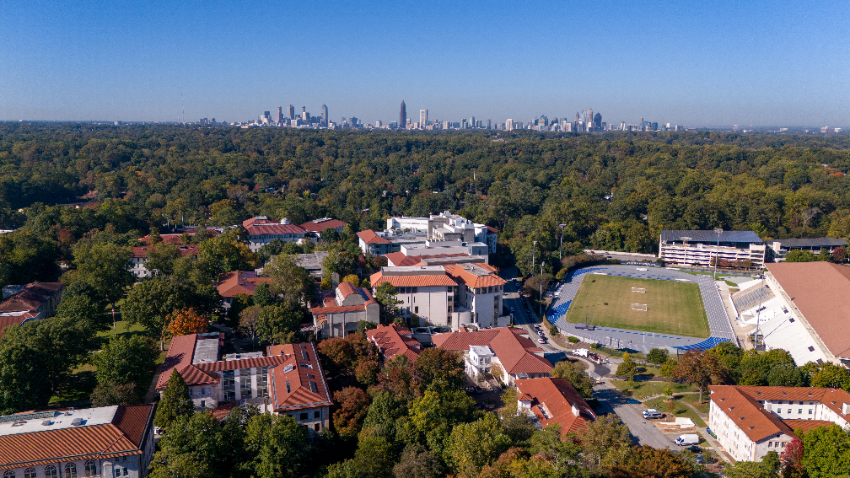 Emory University and Georgia Tech are investing more than $1 billion in artificial intelligence (AI), building one of the nation’s most robust AI ecosystems in the city of Atlanta.
 -
 The Emory Human Performance Institute joins the Alliance's network of Innovation Hubs, expanding efforts to translate the science of peak performance.
Media Contact
Resources
Recent News
-
Oct 13, 2026
-
Oct 8, 2026
-
Sep 24, 2026
-
Sep 21, 2026
Emory transplant surgeon Christian Larsen honored with American College of Surgeons Jacobson Innovation Award
Date: Jun 18, 2026
Print
Share