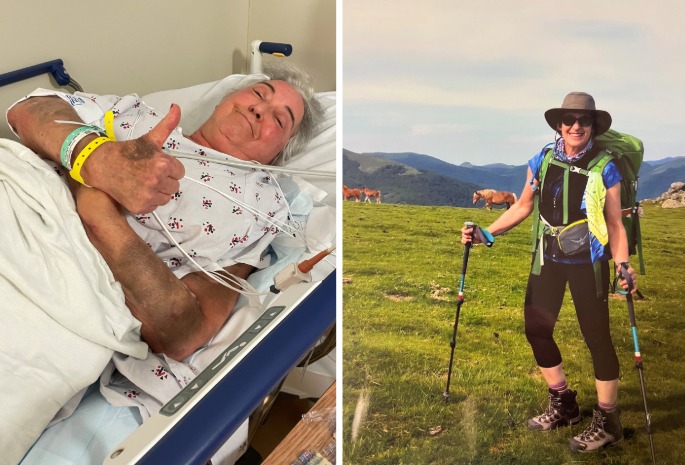

April has spent her career caring for other people.
As a nurse in long-term care, she has spent more than 20 years helping older adults through some of life’s most difficult moments. She loves hearing their stories, comforting families and making sure patients feel cared for when they need it most.
But in 2024, April suddenly found herself on the other side of the healthcare system.
She was attending her niece’s graduation when she tripped while walking up a flight of stairs.
“Who falls going up the stairs?” she remembers thinking.
At first, she brushed it off. Her legs felt tired. Maybe she was working too hard. Maybe she was simply exhausted from years of caring for others.
But the symptoms didn’t go away.
Her legs grew weaker. One foot began to drag. Everyday movements became more difficult.
Eventually, April sought answers.
Today, the 44-year-old wife, mother and nurse is living with amyotrophic lateral sclerosis (ALS), often called Lou Gehrig’s disease.
But her story is not just about an ALS diagnosis.
It’s also about hope — not just for April, but for the future of ALS treatment.
And it is a story decades in the making.