Strong Girls, Stronger Futures: Why Strength Training is Important for Young Female Athletes

By: Mary Loftus
Date: Jul 29, 2026

Strength training has long been viewed differently for girls than for boys. While many young male athletes are encouraged to spend time in the weight room, young female athletes are often steered toward activities focused on flexibility or endurance.

Cassidy Foley Davelaar, DO, an Emory Healthcare physician in pediatrics and sports medicine, says that disparity starts early and can have lasting effects on athletic development, injury prevention and lifelong health.

Dr. Foley's passion for supporting young female athletes stems from her own experience as a competitive figure skater growing up in Maine. As a young athlete navigating injuries, she sometimes felt her concerns weren't taken seriously because she was in an aesthetic sport. This sparked a commitment to helping young athletes feel heard, supported and empowered.

Today, Dr. Foley works closely with pediatric and adolescent athletes and encourages young athletes, male and female, to use strength training as a tool for better performance, injury prevention, confidence and long-term wellness.

“The goal isn't to create stronger athletes for a single season. It's to help young people develop healthy habits for life,” Dr. Foley says.

Dr. Foley agreed to answer 10 questions about why strength training is beneficial for young athletes – especially young female athletes.

“But of course,” she adds, “it’s beneficial for all of us.”

Pulse

Leading orthopaedic and sports medicine treatments

Learn about Emory Orthopaedics & Spine care. Make an appointment online, find a provider or call 404-778-3350 to schedule an appointment.

Stronger, safer, better

1. You've been passionate about encouraging girls to strength train since your time in pediatrics. What first sparked that interest?

My interest really comes from both my personal and professional experiences. My dad was a physical education teacher and a strength and conditioning coach, so I was introduced to strength training early. Now, having seen both the real-world impact and the research behind it, I'm even more convinced of how important it is, especially for girls.

We also know there's still a large gender gap in participation. Research has shown that girls can perform strength-training exercises just as well as boys, and in some cases even better because of differences in maturity and ability to follow instruction. Yet we still see far fewer girls participating.

“Research has shown that girls can perform strength-training exercises just as well as boys.
-Cassidy Foley, DO, pediatrics and sports medicine physician

2. What are you seeing today among young female athletes that makes this conversation so timely?

One of the biggest things I notice is that girls tend to be introduced to sports later than boys and often participate in fewer sports overall. Boys are typically exposed to a wider variety of activities at younger ages.

I'd love to see more girls trying different sports earlier in life. That variety helps develop movement skills, confidence and athleticism that benefit them later, regardless of which sport they ultimately choose.

3. What are the biggest benefits of strength training for young athletes? Why do girls, in particular, have so much to gain?

Youth sports have become increasingly specialized. Kids are often performing the same movements over and over, whether that's swimming, gymnastics, running or another sport.

Strength training helps create balance. Specific sports develop certain muscles more than others, which can lead to asymmetries in the body. Strength training allows athletes to strengthen muscles that may not get much attention during their sport. It helps build a well-rounded athlete by improving strength, stability and movement in different planes.

Strength training is about much more than lifting heavy weights. It’s about building strength, balance and symmetry.”
-Cassidy Foley, DO, pediatrics and sports medicine

4. Beyond improving sports performance, what lifelong health benefits can strength training provide?

Strength training can help keep adolescents engaged in physical activity. We know many young people, especially girls, drop out of sports during their teenage years.

Strength training offers an alternative that's focused on personal progress rather than competition. Participants enjoy seeing measurable improvements – maybe yesterday they could do 10 repetitions and today they can do 12. These personal gains can be incredibly motivating.

Research shows that children who are physically active are more likely to remain physically active as adults. That’s one of the greatest gifts sports can give us.”
-Cassidy Foley, DO, pediatrics and sports medicine physician

5. How does strength training help reduce injuries in young female athletes?

Girls may be more quad-dominant, meaning their quadriceps are stronger than their hamstrings and glute muscles. This can lead to an imbalance, with stronger quads and weaker hamstrings – sometimes as much as a 2:1 difference in strength – which can place extra stress on the knees and lower back and may increase the risk of injury.  

Building strength in hamstrings, glutes, core and hip muscles is important, as this helps support the knees and lower back, improves posture and contributes to better overall movement patterns.

6. We hear a lot about ACL injuries in girls' sports. Why are female athletes at greater risk?

Several factors are involved, including differences in strength and movement patterns. That's why strengthening the muscles around the hips, glutes and core can be so important. By improving strength and control in those areas, athletes can better support their knees and reduce stress on vulnerable structures like the ACL.

7. What are some of the biggest misconceptions you hear about girls and strength training?

The biggest misconception is that strength training means lifting heavy weights. That's simply not true. You can get an amazing workout using body-weight exercises, resistance bands or light resistance.

Another myth is that girls will become bulky. Most young athletes can develop lean muscle and improve strength without dramatically changing their appearance.

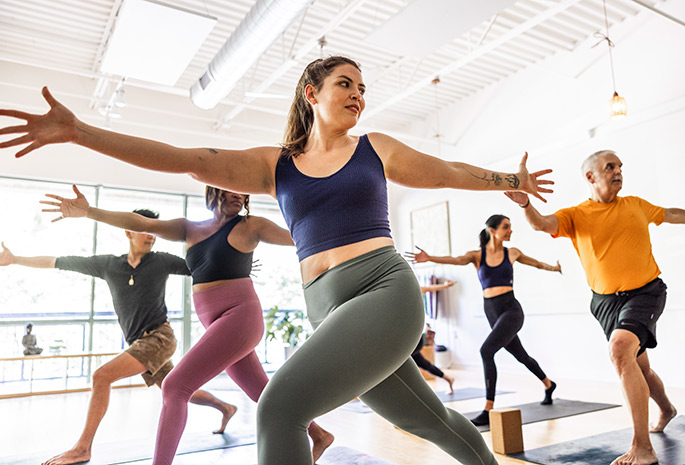
I also think we've sent some confusing messages culturally. Many girls have been directed toward activities like yoga while boys are encouraged to strength train. In reality, both strength training and flexibility work are important for everyone.

“Girls should be heading to the weight room, and boys should be stretching and doing yoga, too.”
- Cassidy Foley, DO, pediatrics and sports medicine physician

8. What does age-appropriate strength training look like?

For younger athletes, it's mostly body-weight exercises and mastering techniques like squats and lunges. As athletes mature, they can progress to resistance bands, medicine balls and eventually additional weight if they can maintain proper form. Technique is always the priority.

“The goal isn't lifting heavier. It’s focusing on technique and building the skills to do movements successfully.”
-Cassidy Foley, DO, pediatric and sports medicine physician

9. Does strength training benefit adolescents who don't play organized sports?

Absolutely. I love strength training as a way to reintroduce physical activity to adolescents who may have stepped away from sports. It offers significant health benefits and gives young people an opportunity to focus on personal improvement. It's also a great way to build healthy habits that can last a lifetime.

10. What's one message you'd like every young girl to hear about becoming stronger?

Strong girls become resilient adults. We know girls who participate in sports are more likely to succeed in school, graduate from college and go on to leadership roles later in life. Strength is about far more than physical ability. It's about confidence, resilience and learning how to overcome challenges.

“Strong girls are resilient and face adversity with more skill sets.”
-Cassidy Foley, DO, pediatric and sports medicine physician

Rapid Answer with Dr. Cassidy Foley

Strength training or cardio?
Strength training.

One exercise every young athlete should learn?
Working on balance.

How many days a week should teens strength train?
Two to three days per week, focusing on proper recovery and technique.

One habit that builds healthier athletes for life?
Participating in a variety of sports at a young age, physical activity becomes a habit that continues for life.

About Emory Orthopaedics & Spine Center

Emory Orthopaedics & Spine offers comprehensive orthopedic and spine care at multiple locations across the Atlanta metro area, and our orthopedic and spine programs are ranked among the top in the nation. Our highly trained orthopaedic and spine specialists work together to diagnose and treat a wide variety of orthopaedic, spine, and sports medicine conditions.

Our physicians use innovative approaches to care – many of them pioneered right here at Emory – to ease your pain and get you back to an active lifestyle.

Emory University Orthopaedics & Spine also has among the highest patient satisfaction and best outcome rates in the nation* for your surgery. By using advanced research techniques developed by our top surgeons, we can make sure your surgery is done right the first time.

*Results based on an average of 86% patient satisfaction rating compared to a national benchmark of similar facilities at 68%. Infection rates averages at .45% for primary hip and knee procedures compared to .58% nationally.


Related Posts

  • Woman searching information on her phone at home
    Tech neck, screen-related neck pain, neck pain from phone use, smartphone posture, poor posture and neck pain, what is tech neck, smartphone posture tips, how to fix tech neck, best stretches for neck pain
  • soccer players on the field
    Soccer pushes the body with nonstop movement. Learn common injuries, concussion risks and expert tips from Emory physicians to play safer.
  • Michael running
    Runner returns to competition after hip resurfacing surgery at Emory Orthopaedics & Spine Center, overcoming arthritis and reclaiming an active life.

Emory Healthcare Pulse

For more stories and health and wellness tips, sign up for our monthly newsletter.


Sign Up


Recent Posts