older people playing a boardgame

Varicose Vein Treatment

Varicose Vein Treatment

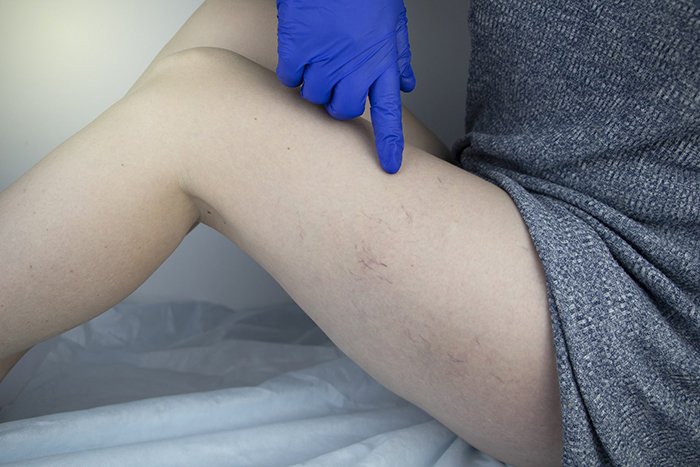
Varicose veins cause symptoms including fatigue, heaviness, aching, burning, throbbing, itching, or cramping. Untreated varicose veins can become severe, leading to eczema, inflammation, or a leg ulcer.

Emory Heart & Vascular offers several ways to treat varicose veins. 

Non-Surgical Treatments of Varicose Veins

Our expert team may recommend starting with a non-surgical treatment for your varicose veins. These treatments include:

  • Compression stockings: These stockings are usually your first treatment option. They gently squeeze your legs to help your leg muscles and veins move blood. This way, blood does not pool in your legs. Compression stockings can improve symptoms but do not treat the underlying issue in your veins.
  • Lifestyle changes: Our specialists may recommend weight loss or exercise to help circulate your blood. They may suggest that you raise your legs when you sit or lie down. This helps prevent your varicose veins from worsening.

Surgical Treatments and Other Procedures for Varicose Veins and Spider Veins

Your varicose veins may require surgical treatment. Emory Heart & Vascular offers the following procedures:

  • Ambulatory phlebectomy/excisions: Specialists remove smaller varicose veins through tiny punctures in your skin. Following this procedure, you will wear a bandage or compression stockings.
  • Sclerotherapy: This procedure is for spider veins. Spider veins are typically smaller than varicose veins and are considered cosmetic. Injections of foam or another solution make your spider veins fade. This process usually takes a few weeks. You may need more than one treatment. Sclerotherapy can also treat larger veins and the residual veins left over after an ablation. 
  • Varicose vein ablation: This is a minimally invasive outpatient procedure performed in our office. There are several types:
    • Endovenous laser treatment (EVLT): Heat from a catheter makes the vein close and seal shut.
    • Radiofrequency ablation (VNUS Closure): This is the same as EVLT but uses radiofrequency instead of a laser.
    • Varithena®: Doctors inject foam into the diseased vein, causing it to collapse.
    • VenaSeal™ Closure System: This uses a specially formulated medical adhesive to collapse the vein.

Your doctor will work with you to find the best treatment for your varicose veins.

Varicose veins are large, bulging or twisted veins directly under the skin’s surface. They often occur in the legs and can cause aching, throbbing, heaviness and more.
Frequently Asked Questions
  • Vein Closure Using Ablation

    How does vein ablation work?

    A vein ablation is a minimally invasive procedure for superficial varicose veins, in which a thin catheter is inserted into the vein through a small opening and heat is used to collapse and seal the vein shut. Since valves cannot be repaired, the only alternative is to re-route blood flow through healthy veins. Traditionally, this has been done by surgically removing (stripping or ligating) the troublesome vein. These procedures provide a less invasive alternative to stripping or ligation by simply closing off the problem vein instead. Once the diseased vein is closed, other healthy veins take over the transport of blood from the legs back to the heart.

  • EVLT is a laser procedure and RF is radio frequency. It really just refers to the energy source used for the closure procedure. EVLT uses laser and so the catheter has a much higher temperature than the radio frequency closure.

  • As with any medical intervention, potential risks and complications exist with the procedure, though they are minimal. All patients should consult with their doctors to determine if other existing health conditions present any special risks. Your physician will review potential complications during your consultation.

  • The ablation procedure decreases the pressure to relieve symptoms of heaviness and swelling and the appearance of veins is also lessened.

  • What is sclerotherapy?

    Some varicose veins can also be treated using the sclerotherapy procedure. A tiny needle is used to inject the veins with a solution that irritates the vein lining, causing the veins to collapse and ultimately be reabsorbed so that they are no longer visible. Depending on the type and number of veins being treated, one to several sclerotherapy sessions may be needed.

  • Most insurance companies pay for both the EVLT and the VNUS closure procedure in part or in full. Insurance companies determine coverage for all treatments based on medical necessity. Our staff can discuss your insurance coverage further at the time of consultation.

  • Vein ablation using the laser or the radiofrequency technology both take approximately 30 minutes to an hour, though patients normally spend 60-90 minutes at the medical facility due to normal pre- and post-treatment protocols.
  • There is no scarring or swelling following either procedure. Most patients have some bruising that resolves within two weeks.
  • Many patients experience immediate improvement or resolution of their symptoms; however the entire treatment plan could take up to several months.
  • Patients can resume normal activities immediately. For 10 days following treatment, your doctor may recommend a regular walking regimen and suggest you refrain from very strenuous activities.
  • Only a physician can tell you if the laser or radiofrequency ablation technology offered at our center for vein treatment is a viable option for your venous problem. Experience has shown that the vast majority of patients with superficial varicose veins are candidates for this minimally invasive vein procedure.
  • Age alone is not a factor in determining whether or not the procedure is appropriate for you. Vein treatment using a laser or radiofrequency has been used for patients across a wide range of ages.
  • Following treatment, the vein simply becomes fibrous tissue. Over time, the body re-absorbs this tissue, and the treated vein is eventually indistinguishable after the procedure is performed.
  • Sclerotherapy causes only minimal discomfort. While bruising typically disappears within one to two weeks, any pigmentation that occurs can persist for several months before fading. Normal activities can be resumed immediately, though medically prescribed support hose may have to be worn for several days or up to several weeks to assist in resolution of the veins. Other complications such as scarring are rare.

Find an Emory Doctor

Emory Healthcare doctors provide specialized treatment and research the latest advancements.

View Emory Physician Profiles

Explore our Network

To expand your options, explore our network of providers throughout Atlanta and the surrounding counties.


Related Stories

  • Women sitting in a doctors office and waiting
    A commonly asked question by patients seeking treatment for varicose veins is “Did crossing my legs while sitting cause them?” Find out now.
  • Business woman bending over holding her knee
    Have long days on your feet led to varicose veins? Emory Vein Center offers several outpatient minimally invasive procedures to help.
  • varicoseveinshereditary2000x1333
    We inherit many things from our parents, and a genetic predisposition toward varicose veins may just be one of them. Learn more.
Make an Appointment

Make an Appointment at Emory Heart & Vascular

Create a MyChart account to schedule online or call 404-778-8346 to schedule an appointment.


Make an Appointment
Schedule Online In MyChart
 
Call 404-778-8346
 
View our call center hours
Please visit our privacy policy for more information.