
Learn more about why your annual well-woman visit with your OB/GYN is essential:
The Essential Well-Woman Visit: Your Guide to Lifelong Health
Date: May 4, 2026

Your annual wellness exam with an OB/GYN isn’t just another appointment — it’s one of the most important investments you can make in your long-term health. At Emory Healthcare, we believe every woman deserves comprehensive, compassionate care, and your well-woman visit is the cornerstone of that commitment.
This exam is your chance to check in on not only your reproductive health, but to ask questions and address concerns, talk about symptoms you may be having (even the ones you’ve been ignoring), learn about age-appropriate screenings, and so much more.
Your visit is part of an ongoing, life-long conversation
Some of the biggest misconceptions about a well-woman visit? That your check-up is only a physical exam. Or that it’s only important during your childbearing years. Or that you only need an exam when you’re experiencing a problem.
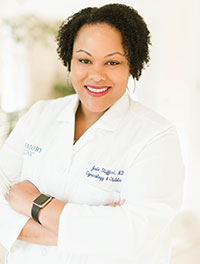
Jade Stafford, M.D., director of the division of general OB-GYN at Emory and chief of OB-GYN at Emory University Hospital Midtown, says your annual exam is a great chance to check in on all the things that are going on with you — from contraceptive options to reproductive health to lifestyle habits to healthy aging. Dr. Stafford and the expert team at Emory Healthcare are dedicated to providing personalized care that addresses your unique health journey.
“A lot of people are getting their information from either word of mouth or social media, and much of that information is not accurate. I try to get ahead of that by talking with patients, giving them accurate information and educating them about things they need to know.”
- Jade Stafford, MD
Top questions to bring to your well-woman visit
Want a better, more productive visit? Come prepared. Dr. Stafford’s advice is to write down your top goals for the visit, track symptoms ahead of time, and be honest and direct.
“I actually love when patients bring a list of questions,” she says. “It helps us focus and make sure their concerns are addressed.”
Common questions from patients include checking the accuracy of health information they’ve seen online, or asking about irregularity in their menstrual cycle, pain during sex, or what to do about brain fog.
Well-woman visits can include discussions about:
- Mental health
- Heart health
- Weight and exercise
- Diet and dietary supplements
- Hormonal changes
- Lifestyle habits
- Medications
Your OB/GYN looks at your health holistically. “I always remind patients, I’m your OB/GYN, not your primary care provider,” Dr. Stafford says. “But I can absolutely help guide you to the right resources and specialists.”
Your health is in your hands, and doctors should never make you feel ashamed, embarrassed, or unheard.
“You can always say, ‘I don’t feel like I’m being heard — can we redirect this conversation?’ And if a doctor doesn't respond well to that, you can change providers. We are talking about intimate topics, and there needs to be a level of trust.”
- Jade Stafford, MD
Your decade-by-decade guide to women's health
Staying proactive with your health is essential. Here’s a quick look at key screenings and topics to discuss with your OB/GYN at every stage:
-
Screenings: Cervical cancer (PAP smear starts at 21 and occurs every 3–5 years depending on age and results), sexually transmitted infections (STI) testing
Topics: Contraception, immunizations, fertility planning, establishing long-term OB/GYN care -
Screenings: Continue cervical cancer screening (PAP/human papillomavirus (HPV))
Topics: Deeper fertility discussions (especially after 35), early perimenopause conversations, holistic health -
Screenings: Mammograms (start at 40), colonoscopy (start at 45), cholesterol and diabetes
Topics: Perimenopause symptoms, heart health -
Screenings: Continue mammograms, colonoscopy, bone density scans
Topics: Menopause symptom management, hormone replacement therapy (HRT) options, vaginal health -
Screenings: Continue mammograms, colonoscopy, bone density
Topics: Immunizations, post-menopause care
Thinking about having a baby (or not)
Fertility planning and contraceptive issues are common topics to discuss with your OB/GYN. These include birth control methods, reproductive health screenings and preparing for pregnancy and childbirth.
Dr. Stafford suggests that women should start OB/GYN checkups by at least age 21. Common screenings during your 20s include PAP smears (which test for cervical cancer) and testing for sexually transmitted diseases.
More women are choosing to have children later, she says, which makes early planning even more vital. “Fertility and egg quality start to decline after age 35,” she says. “So, it’s important to start those conversations in your 20s or early 30s.”
If you desire to get pregnant and have a biological child eventually but aren’t ready yet, egg freezing is one option.
“Knowledge is power. Knowing your options is going to help you make a plan.”
- Jade Stafford, MD
A tip to make life easier? Track your cycle
One of the simplest but most powerful tools for your own knowledge and to help provide your OB/GYN with useful information? Tracking your period.
“I recommend using an app so you’re not relying on memory,” says Dr. Stafford.
Menstrual cycle tracking can help identify:
- Hormonal patterns
- Premenstrual syndrome (PMS) or premenstrual dysphoric disorder (PMDD)
- Early warning signs of conditions
- If your cycles are regular or irregular
- Family planning
- If you are in menopause or perimenopause
Are you in menopause?
With more coverage in the media and conversations happening online, many women are self-diagnosing menopause and perimenopause.
“Everyone thinks they’re in perimenopause right now,” Dr. Stafford says. “But if your periods are still regular, it’s less likely.”
She’s proactive about starting the conversation early. “I begin talking to patients in their mid-30s, so they’re getting accurate, evidence-based information,” she says.
Menopause begins once you have missed your period for 12 months. During that time, and after, your body produces less estrogen and other hormones, and it’s those changing hormone levels that bring on many of the symptoms.
Common menopause symptoms that may be associated with hormonal changes:
- Brain fog
- Sleep issues
- Mood changes
- Low libido
- Vaginal dryness
- Hot flashes
These symptoms may also have other causes, so it’s good to consult your provider before assuming it is menopause.
“We love being part of that journey — from your 20s through fertility, perimenopause and menopause. That long-term relationship helps us take the best care of you. It’s about helping you be your healthiest self at every point in your life.”
- Jade Stafford, MD
What to expect at peri-menopause and post-menopause visits
Women’s well visits after you enter peri-menopause and post-menopause can focus on:
- Menopause and perimenopause symptom management
- Breast health
- Vaginal health and sexual wellness
- Bone health and aging
- Hormone replacement therapy or other symptom management options
Once a woman is in perimenopause or menopause, she may prefer a menopause-certified practitioner.
Hormone replacement therapy (HRT) may be helpful during perimenopause and menopause. Increased awareness and reduced stigma have allowed women to better understand HRT’s benefits and risks.
Dr. Stafford recommends speaking with your OB/GYN about your family history and individual symptoms to see if it is right for you.
Alternatives to HRT can help target individual symptoms, such as:
- Sleep-focused treatments
- Pelvic floor therapy
- Mental health support
- Sexual health counseling
“We can target the symptom that’s most bothersome and treat that specifically,” she says.
What symptom should you never ignore?
“Abnormal bleeding is the number one symptom women should never overlook,” Dr. Stafford says.
Why? Because it can signal a wide range of conditions, including:
- Fibroids
- Hormonal imbalances
- Polyps or ovarian cysts
- Bleeding disorders
- Precancer or cancer
Whether it’s heavy bleeding during menstrual cycles (going through a pack of pads, for example) or light bleeding well after menopause, women are tempted to normalize it.
“Some patients think heavy bleeding is normal because their mom or sister had it,” she says. “But it’s not normal. And we can often treat it.”
Establish a strong, continuous relationship with an OB/GYN
One of the most important things you can do for your health, Dr. Stafford says, is to establish a strong, continuous relationship with an OB/GYN as well as a primary care physician.
Over your lifespan, your needs evolve, and well-women’s care evolves along with you.
“Establish care with an OB/GYN you trust in your 20s and keep that relationship long term,” Dr. Stafford says.
From your first consultation to menopause and beyond, continuity matters.
Women’s health: a lifetime relationship
At Emory Healthcare, women’s health services cover a spectrum of needs a woman may have throughout her life – from birth control or family planning to regular cancer screenings or treating menopause symptoms. We also offer newborn delivery care at three locations: Emory University Hospital Midtown, Emory Johns Creek Hospital, and Emory Decatur Hospital.
Some of the best doctors in their fields are just a phone call away. Access any specialist you may need—whether you’re:
- Trying to conceive
- Navigating a high-risk pregnancy
- Struggling with postpartum depression
- Going through perimenopause
- Working through any other experience unique to women and individuals assigned female sex at birth
You have your own goals, your own needs and your own history or concerns. We’ll meet you wherever you are—and help get you where you want to be.
Related Posts
-
 Women’s health services' annual well woman exams are a way for women to check in with their doctors about the care they might need throughout their life.
 -
 Women’s wellness is more than a Pap test. A women's well exam is a chance to connect with your provider to discuss any concerns and prevent future issues.
 -
 Learn the symptoms of polycystic ovary syndrome (PCOS), how PCOS affects fertility, and when to see an OBGYN at Emory Healthcare.
Emory Healthcare Pulse
Recent Posts
-
Oct 6, 2026
-
Sep 25, 2026
-
Sep 17, 2026
-
Sep 5, 2026
-
Aug 20, 2026
-
Aug 7, 2026