
A woman in her early 50s smiling in a kitchen

Stroke

Exceptional Stroke Care in Atlanta

Strokes strike fast and, unfortunately, all too often. These conditions can be devastating. Every year, they are a leading cause of death in the U.S. and a leading cause of disability.

When you recognize a stroke and quickly get the right help, you have the best chance for a meaningful recovery. Emory Stroke Center has dedicated stroke teams and everything you need for fast diagnosis and treatment. You get a level of care here that you won’t just find at any hospital.

Why Choose Emory Healthcare?

Emory Healthcare has comprehensive stroke centers, primary stroke centers and acute stroke-ready hospitals. Additionally, we’re certified by The Joint Commission, which speaks to the quality of care we provide.

As our patient, you have access to the most modern stroke technology and the latest stroke therapies. Our neurointensive care unit (NICU) gives you the best possible stroke and neurologic care. Our specialized approach means more patients survive and experience less severe complications.

  • Stroke patients are able to return to independence soon after discharge.
  • Stroke patients who require intensive acute rehabilitation have seamless access to our Emory Rehabilitation Hospital.

You also benefit from the knowledge, experience and research of our stroke specialists and the entire Emory team. You’ll see firsthand what places us among the best stroke centers in the country.

Types of Stroke

A stroke is sometimes called a brain attack. It occurs when there is an interruption in blood flow to your brain. There are two types of stroke:

  • Ischemic: Occurs when a blood vessel that supplies blood to part of your brain becomes blocked. If brain cells don’t get the oxygen and nutrients they need, they can die. These represent about 87% of all strokes.
  • Hemorrhagic: Occurs when a blood vessel in the brain ruptures. As blood builds up in your skull, it may put pressure on your brain, crushing brain tissue and limiting blood flow. Conditions that can lead to this type of stroke include:
    • Arteriovenous malformation: An abnormal connection between arteries and veins in the brain.
    • Dural arteriovenous fistula: An abnormal connection between the arteries that supply the covering of the brain with blood and veins.
    • Intracranial aneurysm: A weak spot in the wall of an artery in the brain, that can potentially rupture.

Early Signs of Stroke

The sooner we restore blood flow to the brain, the better the outcome will likely be. This makes it vital to recognize the signs of a stroke. Use the acronym BE-FAST to recognize stroke symptoms:

B – Balance. Loss of balance
E – Eyes. Blurred vision or loss of vision
F – Face. Weakness on one side of the face
A – Arm. Weakness of an arm or leg
S – Speech. Difficulty speaking
T – Time. Time to call 9-1-1 if any of these symptoms occur

If you think you or someone else is having a stroke, call 9-1-1 right away. Note the time symptoms started. Medications and procedures to reduce your risk of long-term disability from stroke are most effective when treated early after symptoms start. Even if symptoms get better, seek immediate help as this could be a transient ischemic attack (TIA), a warning sign for a potentially future stroke.

Risk Factors of Stroke

Anyone can have a stroke, but certain factors increase your risk. Some are genetic. Others are related to your lifestyle or medical conditions.

Risk factors you cannot change include:

  • Being African American
  • Being male
  • Being older than 55
  • Having a family history of stroke

Risk factors you can modify with lifestyle changes, medication or surgery include:

  • High cholesterol
  • Limited exercise
  • Obesity
  • Personal history of stroke
  • Poor diet
  • Tobacco and heavy alcohol use
Make an Appointment
Schedule Online
 
Neurology: 404-778-3444
 
Neurosurgery: 404-778-5770
 
View our call center hours
Please visit our privacy policy for more information.
Diagnosing Stroke

Our experts deal with stroke every day. We know the warning signs. Plus, we have the most advanced technology available to diagnose stroke and conditions that may lead to them.


A fast diagnosis leads to fast treatment. Neuroimaging and other technologies we offer include:

  • A minimally invasive medical procedure by our expert physicians to diagnose and treat stroke conditions.
  • We use CT and computer technology to create images of the brain’s blood vessels noninvasively.
  • We take X-rays from many different angles and put them together to get images of the brain.
  • We use CT and specialized technology to measure blood flow in the brain.
  • This test shows the heart’s electrical activity. It can help identify heart problems that may have led to stroke.
  • This test charts the brain’s electrical activity.
  • We use this test to look at the brain’s response to sight, hearing and touch.
  • This MRI study shows blood vessels that supply blood to the brain.
  • This test uses powerful magnets and radio waves to create precise images of the brain.
  • This MRI study measures blood flow to regions of the brain.
  • We use high-frequency sound waves to detect plaque buildup on the walls of arteries in the neck and head.
  • This test shows brain activity and blood flow with the help of a radioisotope compound and a gamma camera. We inject the compound into the bloodstream and it travels to the brain. The camera then detects areas where the isotope gathers, and a computer translates the images into a map that shows brain function.

Physician Referrals

To refer a patient to the Emory Stroke Center, please email neuro.stroke@emoryhealthcare.org or complete this referral form and fax it to 404-778-6022.

If you would like a consultation or advice, we can connect you to an Emory Healthcare provider. Our referral specialists are available Monday through Friday, 7:30 a.m. to 6 p.m. ET. Please call us at 404-778-5050 or 800-223-6679.

Our referral specialist can also provide:

  • A direct link to our transfer center
    • Please call 404-686-8334 for hospital transfers or emergency calls after hours
  • Information about health care programs, clinical trials or educational opportunities
  • Information about your patients who have been admitted to Emory
  • Other resources such as maps, directories, physician CVs and patient education materials
  • Patient appointment verification
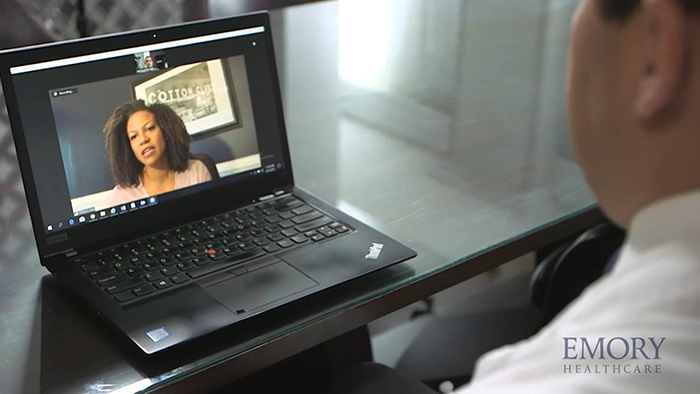
Emory Connected Care Boosts Stroke Patient's Recovery

“I had a unique case in that I was 44 and having a stroke,” says Tiffany. “I’m young and healthy. No issues. No high blood pressure or anything like that. I needed someone who was going to really be persistent about figuring out what caused my stroke. So, I knew I needed to go to Emory.”

Frequently Asked Questions

At Emory Healthcare, we don’t just treat stroke, we work to help you avoid them. You can rely on us for education about risk factors, healthy habits and treatment for conditions that raise stroke risk.
  • Up to 80% of strokes may be preventable. There’s no guarantee you’ll avoid a stroke, but your habits may help reduce your risk.

    • Achieve and stay at a healthy weight
    • Eat a healthy diet
    • Exercise regularly
    • Limit alcohol
    • Lower your cholesterol
    • Manage stress
    • Quit smoking if you’re a smoker
    • Get 7 to 9 hours of sleep nightly
  • People aged 70 and older have the greatest risk. Although men have a greater risk than women, women tend to have strokes at earlier ages than men (in their 40s and 50s) and are more likely to die from a stroke. Having diabetes and heart disease also increases your risk.

  • A stroke kills brain cells. The size of a stroke and extent of the brain damage determine how it will affect someone.

    People who have a minor stroke may have only slight impairments, such as a weak arm or leg. A massive stroke, however, can cause a person to lose the ability to read, write or speak. It also can cause paralysis.

  • The majority of our stroke patients are able to recover with minimal or no impairment. With specialized rehabilitation, patients are able to return back to independence.

Stroke Treatments

We offer medical and surgical treatment options for stroke as well as a full range of rehabilitation services.

Find an Emory Doctor

Emory Healthcare doctors provide specialized treatment and research the latest advancements.

Explore our Network

To expand your options, explore our network of providers throughout Atlanta and the surrounding counties.
network_intelligence

Make an Appointment with Emory Neurology & Neurosurgery

Create a MyChart account to schedule online.

For the neurology department, call 404-778-3444.

For the neurosurgery department, call 404-778-5770.

network_intelligence

Make an Appointment with Emory Neurology & Neurosurgery

Create a MyChart account to schedule online.

For the neurology department, call 404-778-3444.

For the neurosurgery department, call 404-778-5770.